FreeDOS is an open source operating system which is compatible with MS-DOS and applications designed for this older operating environment.


For years, the GCC and the FSF were connected at the hip, but after Richard M. Stallman's return to the FSF board, the GCC steering committee had enough.
The Linux kernel is celebrating its thirtieth anniversary this year. In part two of our interview, we conclude our conversation with Linux creator Linus Torvalds. If you haven't already, check out part one to learn all about Linux kernel development and the creation of the Git version control system.
In this second part, Linus offers insight and perspective gained from managing a large open source project for three decades. He also talks about his employment at the Linux Foundation, and describes what he does with his spare time when he's not focused on kernel development.
As to what makes an open source project successful, Linus admits, "I don't really know what the key to success is. Yes, Linux has been very successful, and clearly Git too started on the right foot, but it's always very hard to really attribute that to some deeper cause. Maybe I've just been lucky?" He goes on to offer three practical recommendations he's followed himself: be there for other developers, be open, and be honest. //
Linus has also worked to stay impartial as Linux has grown and become more successful, "I very consciously didn't want to work for a Linux company, for example. I maintained Linux for the first decade without it being my job. That's not because I think commercial interests are wrong, but because I wanted to make sure that people saw me as a neutral party, and never felt like I was 'the competition'."
On the question of whether or not open source is sustainable, Linus replied, "Yes. I'm personally 100% convinced that not only is open source sustainable, but for complex technical issues you really need open source simply because the problem space ends up being too complex to manage inside one single company. Even a big and competent tech company."
Thirty years ago, Linus Torvalds was a 21 year old student at the University of Helsinki when he first released the Linux Kernel. His announcement started, “I’m doing a (free) operating system (just a hobby, won't be big and professional…)”. Three decades later, the top 500 supercomputers are all running Linux, as are over 70% of all smartphones. Linux is clearly both big and professional.
For three decades, Linus Torvalds has led Linux Kernel development, inspiring countless other developers and open source projects. In 2005, Linus also created Git to help manage the kernel development process, and it has since become the most popular version control system, trusted by countless open source and proprietary projects. //
Regarding creating Git and then handing it off to Junio Hamano to improve and maintain, Linus noted, "I don't want to claim that programming is an art, because it really is mostly just about 'good engineering'. I'm a big believer in Thomas Edison's 'one percent inspiration and ninety-nine percent perspiration' mantra: it's almost all about the little details and the everyday grunt-work. But there is that occasional 'inspiration' part, that 'good taste' thing that is about more than just solving some problem - solving it cleanly and nicely and yes, even beautifully. And Junio had that 'good taste'." //
I very much don't regret the choice of license, because I really do think the GPLv2 is a huge part of why Linux has been successful.
Money really isn't that great of a motivator. It doesn't pull people together. Having a common project, and really feeling that you really can be a full partner in that project, that motivates people, I think. //
I write very little code these days, and haven't for a long time. And when I do write code, the most common situation is that there's some discussion about some particular problem, and I make changes and send them out as a patch mainly as an explanation of a suggested solution. //
Because all my real work is spent on reading and writing emails. It's mostly about communication, not coding. In fact, I consider this kind of communication with journalists and tech bloggers etc to literally be part of my workday - it may get lower priority than actual technical discussions, but I do spend a fair amount of time on things like this too.
A U.K. company behind digital addressing system What3Words has sent a legal threat to a security researcher for offering to share an open-source software project with other researchers, which What3Words claims violate its copyright.
During an interview with Todd Moore, VP Open Technology at IBM, Moore made it clear that IBM has over 80,000 employees who are trained to contribute and participate in open source. The company has processes, classes and mentors who aid in this training. Employees can certify in contributing to open-source projects and IBM encourages this. According to Moore, IBM made 19,000 commits to open source projects last month alone.
"We respect our developer's need to be individuals, and their open source code contributed under a personal ID represents them and their resume" said Moore. "Often our contributors will have a personal GitHub ID and an IBM GitHub ID. We use tooling to track contributions under both IDs to ensure everyone gets credit towards our recognition program."
IBM has a program called IBM Developer, which is a technology-based resource, where developers can discover ways to get involved with open source. The company also introduced the Call for Code global challenge (in conjunction with the Linux Foundation) which takes projects and assists them in getting to market.
All of the past contributions from students and faculty are also being removed
The University of Minnesota has been banned from contributing to the Linux kernel by one of its maintainers after researchers from the school apparently knowingly submitted code with security flaws.
Architecture
Development
Operations
EDGE / IOT / OPEN SOURCE
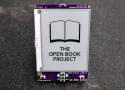
The Open Book Project: An eBook Reader You Can Build Yourself
2 Feb 2020 6:00am, by David Cassel
An amateur hardware enthusiast wants to prove it’s possible for people to build their own ebook readers.
“As a society, we need an open source device for reading,” explains the project’s page on GitHub. “Books are among the most important documents of our culture, yet the most popular and widespread devices we have for reading — the Kobo, the Nook, the Kindle and even the iPad — are closed devices, operating as small moving parts in a set of giant closed platforms whose owners’ interests are not always aligned with readers’.”
“The Open Book aims to be a simple device that anyone with a soldering iron can build for themselves.”
Young continued, "The thing that randos who have never had to actually work with rms don't understand is that MANY people who deeply respected him tried to help him learn to not objectify women, shout over others at Libreplanet as if it was his birthday party, stop sh*t like 'emacs virgins.'
Instead, "That energy, utterly wasted, could've been spent advocating for free software and building the inclusive, impractical community so many people WANT. Spent, instead, on a man's ego, over and over."
Matthew Garrett, a well-known Linux kernel developer and former FSF board member, tweeted, "The idea that someone who does enough "good work" earns a pass for inappropriate behavior is pervasive, and fosters environments where abusers can prosper. People who hold this belief shouldn't be involved in running organizations."
One "outsider" puts it well. Matthew S. Wilson, a longtime open-source developer and AWS VP/Distinguished Engineer tweeted: "It's his life's work. All of the apparatus of the FSF and GNU constructed to assist him in HIS work. To not be part of it would be breaking a commitment, and like abandoning a child. Hence, there is no succession plan, no delegation of decision-making, and tight grips of power."
RMS has long feared that he was being written out of the history of free and open-source software. Now, RMS seems intent on rewriting it by once more having an FSF leadership role. Unfortunately for him, this very effort has caused many people to see him as more of an enemy to the movement he founded than as its heroic founder.
We suspect that closely examining the FSF's own mission statements—as opposed to simply assuming its mission—answers many of the questions about RMS' return. The FSF describes itself as an organization far more concerned with maintaining a part of history it holds dear—and attacking its perceived enemies, whether real or not—than with discovery, outreach, and mentorship to new faces in free software.

why you shouldn't enable auto reboot after a panic.
40,000 lines of flawed code almost made it into FreeBSD's kernel—we examine how.
Don't trust software you haven't audited.
If you must trust software you haven't audited, then choose to trust code that's exposed to many developers who independently are likely to speak up about a vulnerability.
Open source isn't inherently more secure than proprietary software, but the systems in place to fix it are far better planned, implemented, and staffed.

Collaboration suite,
encrypted and open-source
Rich text
Code
Presentation
Sheet
Poll
Kanban
Whiteboard
CryptDrive
Private by design
CryptPad is built to enable collaboration while keeping data private. All content is encrypted and decrypted by your browser. This means documents, chats, and files are unreadable outside of the session where you are logged in. Even the service administrators do not have access to your information.
Every day that goes by SolarWinds proprietary software Orion network monitoring product supply chain security failure gets bigger and bigger. //
Ironically, SolarWinds claimed open source software as being untrustworthy because anyone can infect it with malicious code. A SolarWind writer claimed: security “risk is far less when it comes to proprietary software. Due to the nature of open source software allowing anyone to update the code, the risk of downloading malicious code is much higher. One source referred to using open-source software as “eating from a dirty fork.” When you reach in the drawer for a clean fork, you could be pulling out a dirty utensil. That analogy is right on the money.”
Right. Sure.
SolarWinds followed this up by remarking in another blog that the whole foundation of cloud native computing — containers and container orchestration aren’t trustworthy either. //
But, open source is not the one that’s inherently insecure here. Proprietary software — a black box where you can never know what’s really going on — is now, always has been, and always will be more of a security problem.
I would no more trust anything mission critical to proprietary software than I would drive a car at night without lights or a fastened seat belt. That’s why I’m writing this on Linux Mint with LibreOffice rather than Windows and Microsoft Word. That’s why the internet, cloud native computing, and the cloud — yes even Microsoft Azure — use Linux and open source. //
In short, proprietary software companies, like SolarWinds, are still making huge security blunders, which are hidden from users until the damage is done. At the time, open source programmers and their allies are continuing to make their programs ever more secure and in the open so that everyone benefits
Universal Forfeit License (UFL)
Pronounced "awful"
Version 2.0
Copyright (c) [four digit year] [copyright holders]
(Based on the WTFPL, copyright 2004 Sam Hocevar)
Anyone is permitted to copy, distribute, or modify this license. More information at http://geekwagon.net/ufl.
This license grants more rights than possible to the general public in any jurisdictions; known or unknown, real or fictional, and past or future. This is not limited to governing bodies, planet, galaxy, universe, dimension, or any other jurisdiction that can exist that has not yet been discovered.
You can copy, modify, distribute, sublicense, rename, and/or perform the work, even for commercial purposes, without asking permission or referencing the original.
This work and license is provided without warranty.
Your go-to Self Hosted Toolbox. A directory of free software solutions and web applications which can be hosted locally. 1308 projects organized into 139 categories.
A question to the void. Are you entitled to get the source history of open source projects? Lots of Open Source licences give the consumer of software the right to a copy of the source code. For ex…
Much of the innovative programming that powers the Internet, creates operating systems, and produces software is the result of "open source" code, that is, code that is freely distributed--as opposed to being kept secret--by those who write it. Leaving source code open has generated some of the most sophisticated developments in computer technology, including, most notably, Linux and Apache, which pose a significant challenge to Microsoft in the marketplace. As Steven Weber discusses, open source's success in a highly competitive industry has subverted many assumptions about how businesses are run, and how intellectual products are created and protected.
Traditionally, intellectual property law has allowed companies to control knowledge and has guarded the rights of the innovator, at the expense of industry-wide cooperation. In turn, engineers of new software code are richly rewarded; but, as Weber shows, in spite of the conventional wisdom that innovation is driven by the promise of individual and corporate wealth, ensuring the free distribution of code among computer programmers can empower a more effective process for building intellectual products. In the case of Open Source, independent programmers--sometimes hundreds or thousands of them--make unpaid contributions to software that develops organically, through trial and error.
Weber argues that the success of open source is not a freakish exception to economic principles. The open source community is guided by standards, rules, decisionmaking procedures, and sanctioning mechanisms. Weber explains the political and economic dynamics of this mysterious but important market development.