Truth says:
November 26, 2022 at 1:50 am
there is zero plans for dealing with the fantastic amount radioactive waste
Watch a 2010 documentary film called “Into Eternity” about the Onkalo waste repository at the Olkiluoto Nuclear Power Plant on the island of Olkiluoto, Finland. It should have enough storage space for one hundred years of waste. The “hot” waste after it has been allowed to “cool” for 30 years stored under water will be stored using the Swedish KBS-3 ( https://en.wikipedia.org/wiki/KBS-3 ). The facility should start to store waste starting in 2023.
Or read “Deep Time Reckoning” (How Future Thinking Can Help Earth Now) by Vincent Ialenti which uses Onkalo waste repository as a case study.
I’m not even pro-nuclear, but you have to admire when something is done right. And if you can’t admire that then you can at least admire the engineering and actual long-term thinking. //
Rybec Arethdar says:
November 26, 2022 at 6:46 pm
The big elephant in the room everyone seems to ignore though, is that pretty much all active nuclear power plants have sufficient space built into them to handle centuries of their own waste. The reason we don’t see much effort going into nuclear waste management technology is that it is a problem that is over 100 years out. And thus far every reactor commissioned has been decommissioned before running out of space for nuclear waste storage, so it’s just as far out as it was 50 years ago. Until and unless we start taking nuclear power seriously as a long term solution to our energy needs, nuclear waste disposal never will be a real problem. And countries that are taking long term nuclear energy seriously are already starting to work on solutions, despite the fact that they have at least a century to do it in. //
BrendaEM says:
November 26, 2022 at 8:40 am
SL-1/ Argonne Low Power Reactor Nuclear Accident, was a small reactor, that killed 3 people.
https://en.wikipedia.org/wiki/SL-1
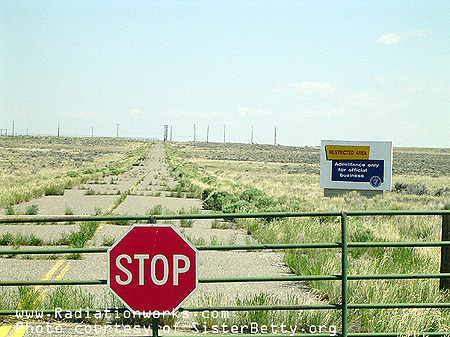
One person was missing for days before they found him pinned to the ceiling. Here’s another rod: https://radiationworks.com/photos/sl1reactor2.htm
They used a C-clamp on a round control rod: https://www.osti.gov/sciencecinema/biblio/1122857
The entire building had to be dismantled: https://www.youtube.com/watch?v=Q0zT9ARfsT4
I believe that the area is still radioactive. “The primary remedy for SL-1 was to be containment by capping with an engineered barrier constructed primarily of native materials.”
Where in your neighborhood do you want the reactor?
https://radiationworks.com/photos/slreactor9.jpg
As far as small reactors being green, here an Indian video which shows tailings ponds from yellow-cake production, which is used to make the green-sand, which makes the nuclear metal for reactors.
Steven Naslund says:
November 29, 2022 at 8:10 am
Also fail to note that SL-1 was a research reactor which was built on a test range. The SL-1 was not really a failure of hardware as much as the incompetence of personnel (there is also rumor of a murderous love triangle underlying the story). The nuclear industry could be much safer but not if we keep using 50s-70s technology. Anyone who is really upset about the nuclear waste issue needs to go see a decommisioned reactor with fuel casks stored on site. It is amazing how little space is taken up. I am not sure about the desirability of burying encased waste, it seems much safer to me to have them stored in casks on pads above ground where they are easy to monitor and maintain. The reprocessing of this waste could reduce it tremendously.


Typing might be faster, but longhand stays with you better. //
One of the most important parts of learning new information is the ability to retain it and recall it later when it is relevant. Writing by hand on paper creates a tactile, personalized experience each time a person takes notes. The complex experience of hand writing on paper contains a multitude of variable elements: the creativity of an individual’s written representation of language, the texture of the paper itself, the fine motor skills needed to translate thoughts into written language, the engagement of the physical senses, and even the reading comprehension strength that we learned of earlier. All of these complexities create a stronger memory of the information that is taken in during the note taking.
There have been a few scientific studies done on the subject of information processing through digital note taking and notes taken by hand. A recent study led by neuroscientist Professor Kuniyoshi Sakai at the University of Tokyo published in March 2021 showed that subjects who recorded calendar event information on paper showed more brain activity than subjects who recorded the same information onto a smartphone when they attempted to recall details about that calendar information later. And they recalled/entered the information 25% faster when writing it by hand.

Following the sky-high box-office numbers of “Top Gun: Maverick,” anyone who glanced at the movie trailer for “Devotion” — a true story of heroic U.S. Naval pilots, currently in theaters — probably thought producers were trying to cash in on the craze.
This historical film has been in the works for over six years, however, starting shortly after the book, “Devotion: An Epic Story of Heroism, Friendship, and Sacrifice,” began to make waves. It recounts how two long-overlooked pilots led a mission that turned the tide in the Korean War’s most brutal battle.
“That entire war has been woefully forgotten,” author Adam Makos told me in a phone interview. “The last major Korean War movie was ‘Pork Chop Hill’ starring Gregory Peck, released in 1959 — over 60 years ago. And Hollywood hasn’t gone there since.”
RCDs are very effective devices to provide protection against fire risk[1] due to insulation fault because they can detect leakage currents (ex : 300 mA) which are too low for the other protections, but sufficient to cause a fire. //
Some tests have shown that even a fault current as low as 300 mA can induce a real risk of fire (see Figure F74) //
For TT, IT and TN-S systems the use of 300 mA sensitivity RCDs provides a good protection against fire risk due to this type of fault. //
The IEC 60364-4-42:2010 (clause 422.3.9) makes it mandatory to install RCDs of sensitivity ≤ 300 mA in high fire-risk locations (locations with risks of fire due to the nature of processed or stored materials - BE2 condition described in Table 51A of IEC 60364-5-51:2005). TN-C arrangement is also excluded and TN-S must be adopted. //
In TN-C system, RCD protection cannot be used, as the measurement of earth fault current by a sensor around line conductors and PEN will lead to permanent wrong measurement and unwanted trip. But a protection less sensitive than RCD but more sensitive than conductors’ overcurrent protection can be proposed. In North America this protection is commonly used and known as “Ground Fault Protection”.
Welcome to explain xkcd, the site that explains many of the obscure references in Randall Munroe's amazing xkcd webcomic!
Jack Devanney; CTX Press 2020
This book focuses on the Gordian knot of our time, the closely coupled problems of electricity poverty for billions of humans, and global warming for all humans. The central thesis of the book is that nuclear power is not only the only solution, it is a highly desirable solution, cheaper, safer, less intrusive on nature than all the alternatives.
Just about everybody, including most pro-nuclear folks, accept the fact that nuclear electricity is inherently expensive. Thanks to its remarkable energy density,
nuclear power is not inherently expensive. It is inherently cheap. This book argues that conventional nuclear power should cost less than three cents per kilowatt hour.
But nuclear power is expensive, prohibitively so in most parts of the planet. The reason why nuclear power is so expensive is a regulatory regime which by design is mandated to increase costs to the point where nuclear power is at least as expensive as coal. In such a system, any technological improvement which should lower cost simply provides regulators with more room to drive costs up. This same regime does an excellent job of stifling competition and technological progress by erecting multiple layers of barriers to entry.
Our goal is not just to make nuclear electricity as cheap as coal or gas fired electricity. The goal is to keep pushing the cost of nuclear power down and down, allowing us to replace fossil fuels almost everywhere. Imagine what we could do with 2 cents per kWh power in electrifying transportation and producing carbon neutral synfuels. This can only be done in a harshly competitive environment. We must force the providers of nuclear power to compete with everybody.
If nuclear power is to be allowed to cleave the Gordian knot of electricity poverty and global warming,then we must completely change the way we regulate nuclear electricity. This book makes the case for this change and outlines what the replacement system needs to look like.
The author is the Chief Designer for ThorCon which is developing a molten salt reactor based nuclear power plant. Although the book makes no mention of ThorCon, he has a horse in this race and an obvious conflict of interest.
dedicated to the solution of the closely coupled problems of energy poverty
The Gordian Knot Group
The Gordian Knot Group (GKG) is dedicated to the solution of the closely coupled problems of energy poverty for nearly 2 billion humans, and global warming for all of us. The Group produces studies related to this Gordian Knot. Anyone can view or print the papers with no obligation. In order to download the PDF files, we ask viewers to log in first.
The GKG has published a book titled Why Nuclear Power has been a Flop. It can be purchased from Amazon and elsewhere. You may also download the PDF from here for free by logging in.
As nationwide protests broke out in China over the weekend threatening to undermine the Chinese Communist Party (CCP) under President Xi Jinping, Quartz revealed that Apple plugged a crack in the regime’s “Great Firewall” that dissidents exploited to communicate. Apple’s latest iOS update released in November placed new restrictions on “AirDrop,” a file-sharing feature on iPhones that allows users to share files directly from one phone to another (and consequently under the nose of government monitors). The update erased unlimited use for Chinese users only.
“Rather than listing new features, as it often does, the company simply said, ‘This update includes bug fixes and security updates and is recommended for all users,'” Quartz reported. “Hidden in the update was a change that only applies to iPhones sold in mainland China: AirDrop can only be set to receive messages from everyone for 10 minutes, before switching off. There’s no longer a way to keep the ‘everyone’ setting on permanently on Chinese iPhones.”
Apple’s new update to benefit the CCP is neither a recent development nor an isolated incident. According to a report from The New York Times last year, Apple routinely compromises privacy and security practices to appease communist leaders.
“Apple’s compromises have made it nearly impossible for the company to stop the Chinese government from gaining access to the emails, photos, documents, contacts and locations of millions of Chinese residents, according to the security experts and Apple engineers,” the Times reported.
A panel of five experts and an experienced moderator addressed the progress being made in creating effective processes to license advanced and non-LWR (light water reactors) at an ANS Winter 2022 panel session titled “Licensing the Future: How the NRC is Approaching Advanced Reactors.” Four out of five of the panelists were cautiously positive and provided descriptions of actions being taken and objectives that are still aspirational. //
Nordhaus then noted that the NRC staff had recently released a Part 53 draft for public comments. He described how the document is 1200 pages long, contains many prescriptive requirements that were cut and pasted from existing regulations, moves ALARA (As Low As Reasonably Achievable) directly into the regulation from its current status as the subject of Regulatory Guide 8.10, and adds qualitative health objectives that are firmly rooted in the linear, no-threshold dose model for radiation health effects.
A survey of advanced reactor developers showed that the overwhelming majority of them do not intend to use Part 53, opting instead for either Part 50 or Part 52.
Aside: Though Nordhaus did not mention it, there were numerous critical comments submitted after the draft Part 53 was released. According to Mo Shams’s presentation, the staff had been operating for some time under the belief that they could produce a final rule by 2024, but they have pushed their stretch goal to 2025 as a result of the need to resolve the large number of comments. By the NEIMA law, the agency still has a 2027 deadline. End Aside.
From his point of view, establishing a burdensome licensing process that is not optimized for efficiently reviewing reactor safety results in “down selecting not on best designs or best business plans.” Instead it chooses winners that have the “most patient investors with the deepest pockets or the greatest talent for rent seeking and getting various sorts of federal or government support.”
Nordhaus concluded his remarks by explaining why he and his organization are so passionate about creating an effective licensing process that is focused on enabling regulators that allow radioactive material to be used to protect public health and safety, protect the environment and contribute to the common defense and security of the United States.
Every reactor that we don’t build, license or commercialize increases public health burdens associated with the electrical system. Further results in higher CO2 emissions intensity. It adds to climate risks and also increases economic and geopolitical risks by failing to commercialize economically viable advanced reactors. The result of that is increasing US and global vulnerability to price volatility associated with coal, oil and gas.
-- Ted Nordhaus, the Breakthrough Institute, ANS Winter Nov 15, 2022
While there is little chance that any of the defendants will serve prison time, a few interesting things came out of the trial.
First, based on a mountain of evidence, Russia was officially labeled as the sponsor and leader of the “rebellion” in Donbas in 2014. This is important as it formalizes what everyone has known but shied away from saying. Russia was shown to have armed the Donbas insurrectionists and provided leaders for key positions.
Second, the convicted men’s claim to “combatant immunity” was disallowed because they were not lawful combatants. That is, the Donbas insurrectionists did not have a clearly defined chain of command, and they did not have an internal disciplinary system or adhere to the law of land warfare.
The latter finding opens the gates for the legal prosecution of members of the LPR/DPR for actions before Russia’s February 24 invasion and taking official command of those militias.
“Slow down. This ain’t Thunder Road,” orders one sign, referring to the song by beloved Garden State star Bruce Springsteen. Another: “Hold onto your butts — help prevent forest fires.” And: “We’ll be blunt. Don’t drive high.”
DOT boss Diane Gutierrez-Scaccetti said the messages “caught on in a big way.” They no doubt brightened the day for millions of motorists, while also getting the point across.
Yet FHA officials banned them nonetheless, The Philadelphia Inquirer reported — without even an explanation. The program ended Wednesday.
Utterly ridiculous. The jokes made substantial points. And if the feds have any evidence they don’t work, they’ve yet to make it public.
Putting a bit of attitude, and humor, into traffic signs isn’t new: New York introduced its “Don’t even THINK of parking here” signs back in 1982, under Mayor Ed Koch. They lasted a long while — and would be cheered if they returned.
There ain’t no sleep with this counting!
Hundreds of sheep have been eerily walking around in a circle for 12 days straight in northern China’s Inner Mongolia region. //
The sheep owner, identified as Ms. Miao, claimed the spectacle began with a few sheep before the whole flock joined, Metro reported. Although there are 34 sheep pens at the farm, only the sheep in one of the pens — number 13 — have been acting this way. //
Some have speculated the sheep’s behavior could be caused by a bacterial disease called Listeriosis — also known as “circling disease.”
“Initially, affected animals are anorectic, depressed, and disoriented. They may propel themselves into corners, lean against stationary objects, or circle toward the affected side,” according to the Merck Manual.
Outbreaks typically occur as a result of spoiled or low quality silage, according to the Merck Manual. In sheep and goats, however, death usually occurs within 24-48 hours after symptoms are observed.
Mastodon, which proudly proclaims it is “not for sale” and has around 4.5 million user accounts, is pretty similar to Twitter, once users get past the complicated sign-up process. The main difference is that it’s not one cohesive platform, but actually a collection of different, independently-run and self-funded servers. Users on different servers can still communicate with each other, but anybody can set up their own server, and set their own rules for discussion. Mastodon is a crowdfunded nonprofit, which funds the full-time work of Rochko—its sole employee—and several popular servers.
The platform doesn’t have the power to force server owners to do anything—even comply with basic content moderation standards. That sounds like a recipe for an online haven for far-right trolls. But in practice, many of Mastodon’s servers have stricter rules than Twitter, Rochko says. When hate-speech servers do appear, other servers can band together to block them, essentially ostracizing them from the majority of the platform. “I guess you could call it the democratic process,” Rochko says.

For some of us, few things get the nostalgia flowing like vintage airline advertisements. This one is from Gourmet magazine, of all places, in 1976.
There’s a lot to pull from here…
For starters, looking at the collage of tails, we spy three classic carriers that no longer exist: Sabena, Swissair, and of course Pan Am. Of all the many airlines that have gone out of business, few were more historically significant than these three.
The ad also celebrates the advent of the Boeing 747SP — the short-bodied, long-range 747 variant that debuted in the mid-1970s. This focus on aircraft type is a hallmark of older ads and something rarely seen any more. When was the last time an airline spent advertising dollars to boast about a particular plane? It made sense in the 1970s, when models were vastly different from one another and some, like the 747 or Concorde, were media stars. Nowadays, with jets so tediously similar, carriers don’t bother and passengers couldn’t care less.
With that in mind, notice that every tail in that panel except for one features a 747. The single exception is the Aeroflot image, which shows an Ilyushin IL-62. These were the days when you could be at Kennedy Airport and watch ten or more 747s take off in a row.
And, of course, the whole premise of the ad — Iran Air showcasing a new link between Tehran and New York — is itself striking. How things change. Iran in 1976 was still three years away from its revolution, and the country’s national carrier was a regular visitor to New York.
Neither did they shy away from including an El Al tail (top row, third one in) up there with the others. This implies that El Al offered a connecting service to Tehran from New York, presumably via Tel Aviv, which is maybe the most remarkable aspect of the entire page.
However, using too many 3rd party scripts will cause a slower loading speed of the website and its Page Speed scores may be worse. At that time, you often have just 2 options: accept the slow loading or remove some scripts. After a while of researching, we found a way to have one more option. It’s delaying the execution or loading of JavaScript. Let's see how!
A number of global banking giants have partnered with the Federal Reserve Bank of New York for a 12-week digital dollar pilot program. //
Ribald1
2 hours ago
Private industry has been doing this since the beginning of money. Ledger accounts actually predate money.
The problem here is not ledger accounts, but the government getting involved.
It's one thing for private individuals to destroy their wealth buying imaginary ledger balances (as is the case with crypto) the right to be an idiot is one of longstanding. Government forcing everyone to be an idiot always turns out poorly.
But interestingly enough, the former CIA director thinks America has bigger things to worry about than China’s tyrants. “I get asked all the time: who poses the most risk? Is it Xi Jinping? I spent a lot of time with Chairman Kim in North Korea. It’s neither of them. It’s not Vladimir Putin, [even though he’s] a bad guy,” he told the crowd. “The greatest threat to the United States is Randi Weingarten, the head of the teachers’ unions. What they are trying to do to the next generation of children,” he shook his head, “to walk away from the greatness of America, to teach our kids that there are more than two genders, to teach our kids that we are racist nation. If we lose a generation that doesn’t understand our founding, our Judeo-Christian heritage, the 74th Secretary of State or the 75th Secretary of State won’t stand a chance.”
How we are born - by Caesarean-section or vaginal delivery - alters how our immune system responds to vaccines, a Scottish and Dutch study suggests.
Babies born vaginally had double the level of protective antibodies produced after childhood vaccines.
The researchers said the difference was caused by the types of good bacteria, which colonise our bodies at birth.
And while C-section babies do get protection, it may need topping up with probiotics or extra vaccines.
Our birth is the moment we emerge from the sterile world of the womb to one teeming with microscopic life.
Microbes - including bacteria, fungi, viruses and archaea - make our bodies home and eventually outnumber our "human" cells.
This hidden half of ourselves is known as the microbiome and one of its roles is training our immune system early in life.
You can use this calculator to obtain the heating value of a given mass or volume of hydrogen or other fuels, or to calculate the mass or volume given a certain heating value. Choose whether you want to convert to heating value or to mass/volume, and then choose the fuel type. Then enter the value you want to convert and its units, and click Convert to initiate the conversion.

There are also valid concerns about the safety of the SLS and Orion hardware. These vehicles are large, complex machines that will only fly infrequently, at most once a year. At such a flight rate, this launch system will always be experimental.
It can reasonably be argued that Starship is also not safe to launch on and land back on Earth. It, too, is a large and complex vehicle that will come back through Earth's atmosphere, dissipate heat, and perform delicate maneuvers before landing under the power of its own engines. Even though Starship will launch at least dozens of times per year, the vehicle is unlikely to meet NASA's safety requirements for humans for a long, long time. So Starship-only missions to the Moon are not a near-term solution.
Something even the prophet cannot predict
However, there is an alternative, the source suggested. NASA presently has a vehicle it has deemed safe enough to launch humans into space and back. That's SpaceX's Crew Dragon spacecraft, which launches on the rocket that owns the world record for the longest streak of successful launches—the Falcon 9. By the mid-2020s, Crew Dragon will already have launched humans into space dozens of times.
The safest and lowest-cost means of completing an Artemis mission to the Moon, therefore, may involve four astronauts launching to a fairly high altitude in low-Earth orbit on Crew Dragon and rendezvousing with a fully fueled Starship. The astronauts would then fly to the Moon, land, and come back to rendezvous with Crew Dragon in Earth orbit. They would then splash down on Earth inside Dragon.
This architecture is less risky because it doesn't involve launching on SLS, nor does it require two rendezvous and dockings in lunar orbit, far from Earth. The crew would only spend a couple of more days aboard Starship than they would during the existing Artemis III plan, so Starship life support should be up to the task. If you care about costs, this plan also excludes the $4.1 billion launch cost of Orion and the SLS rocket and substitutes Crew Dragon, which would be on the order of one-twentieth of the cost.